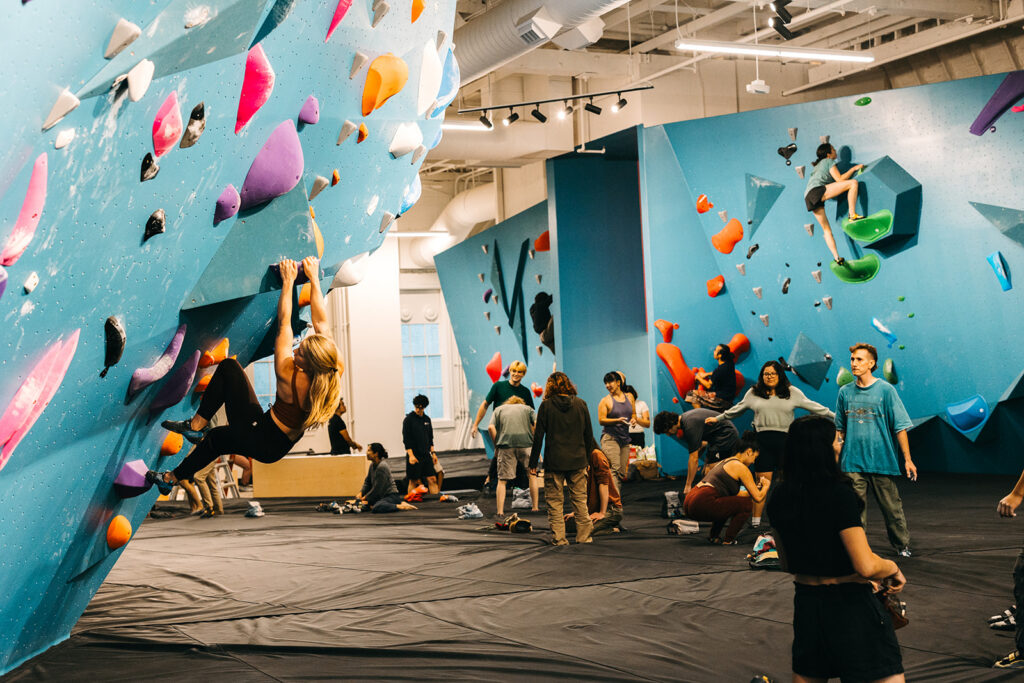
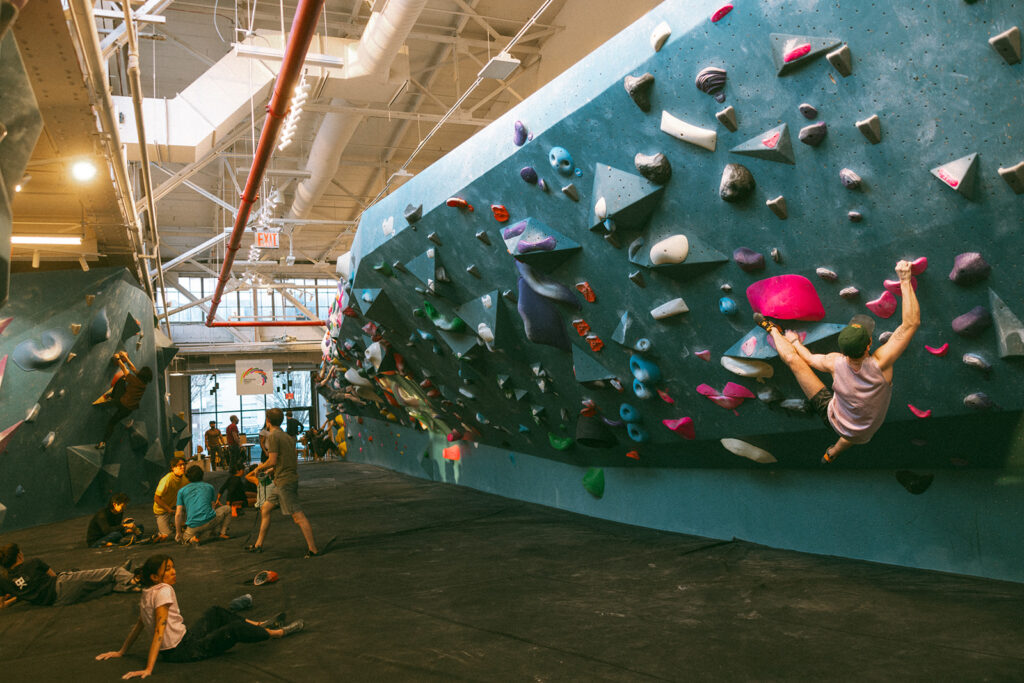
Bouldering invites mental play into our full body strength training. Our brains naturally become familiar with repetitive patterns, settling into the grooves created through repeated movement. When patterns become automatic, growth can slow.
Building muscle mass + endurance
Building muscle through bouldering works differently than traditional weightlifting, but the principles are the same: progressive overload. Traditionally, this is done by adding more weight or increasing repetition. In bouldering, progressive overload takes a different form. We use our body weight along with direction, verticality, and weight transfer to challenge muscles in new ways.
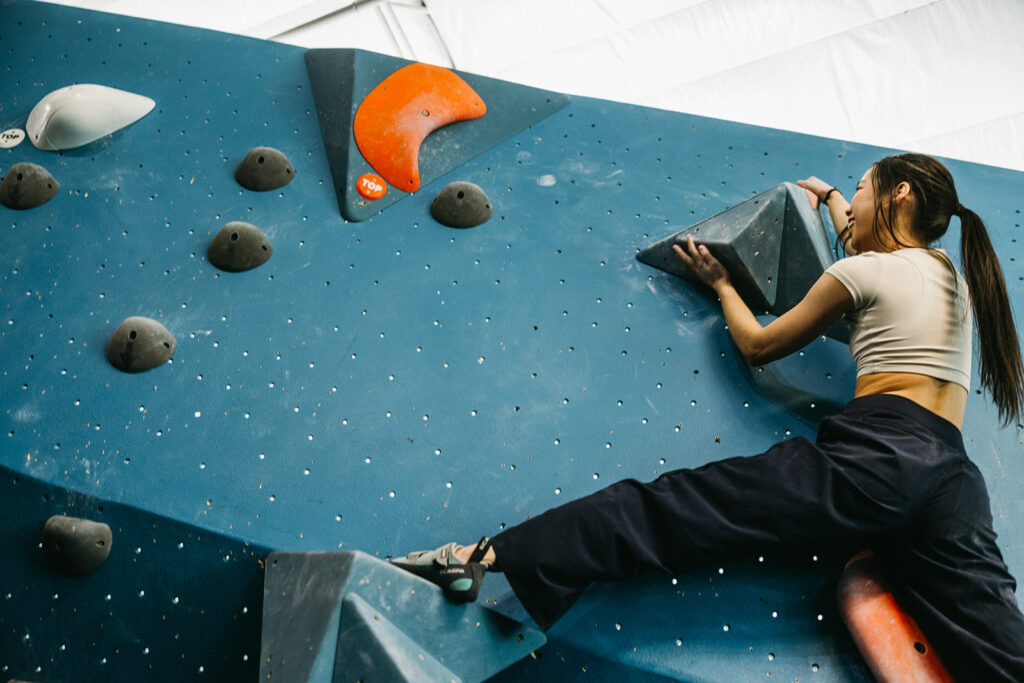
There are an infinite number of ways to load muscles as we climb. Each vertical movement on the boulder cannot be replicated, so each pass is a new stimulus for the body. Over time, our bodies become more efficient, learning to expend less energy while navigating the wall. Muscles get smarter through repeated patterns and refined technique, progressively strengthening fibers to build both muscle mass and endurance. Bouldering is the culmination of technical skill, subtle strength, and stamina, expressed through concise, deliberate movement patterns.