Every climber—even the pros—started as a beginner. I still remember my first time in a climbing gym: I gripped the holds so tight my forearms burned within 10 minutes, I kicked my feet wildly trying to find purchase, and I fell more times than I care to admit. The truth is, climbing is a sport of precision, not brute strength, and most beginners stumble over the same avoidable mistakes. The good news? These mistakes are easy to fix—if you know what to look for. As someone who’s coached dozens of new climbers and learned from my own early blunders, I’m breaking down the 7 most common beginner climbing mistakes, why they hold you back, and how to correct them fast so you can climb better, safer, and with more fun.
Why Fixing These Mistakes Matters
Beginner mistakes aren’t just frustrating—they can lead to fatigue, injury, and even burnout. When you’re wasting energy on bad habits, you’ll tire faster, struggle to progress, and might even start to hate climbing. But here’s the silver lining: most of these mistakes are muscle memory issues, not skill gaps. With a little awareness and targeted practice, you can unlearn bad habits and replace them with techniques that will serve you for years. Whether you’re climbing indoors at the gym or venturing outside for the first time, fixing these mistakes will make every session more enjoyable and productive.
The 7 Most Common Beginner Climbing Mistakes (And Their Quick Fixes)
Let’s dive in—these are the mistakes I see new climbers make every single day, and the simple fixes that will change your climbing overnight.
1. Gripping Holds Too Tight (The “Death Grip”)
This is by far the most common mistake. Beginners often think they need to squeeze every hold as hard as possible to stay on the wall, but this is a huge waste of energy. Gripping too tight tires out your forearms in minutes, leaves you with no strength for the rest of the route, and even reduces your control (tense hands are less precise).
How to Fix It Fast: Think of your hands as “hooks,” not “clamps.” For most holds (jugs, slopers, crimps), you only need a light grip—just enough to keep your fingers on the hold. Practice this: when you’re on a route, periodically shake out your hands and consciously relax your grip. A good rule of thumb: if your forearms are burning within 5 minutes, you’re gripping too tight. Try to hold a jug with just your fingertips—you’ll be surprised how little pressure you actually need.
2. Using Arm Strength Instead of Legs
Climbing is a lower-body sport—your legs are your power source, not your arms. But beginners often rely on their arms to pull themselves up the wall, which leads to quick fatigue and poor technique. Your arms should be used for balance and precision, not lifting your body weight.
How to Fix It Fast: Focus on “pushing” with your legs, not “pulling” with your arms. When you reach for a new hold, bend your legs, push through your feet to lift your body, and then extend your arms to grab the hold. Keep your arms slightly bent (not locked) to maintain balance, but let your legs do the heavy lifting. Practice on easy routes: climb slowly, and for every move, ask yourself: “Am I pushing with my legs?”
3. Looking Down at Your Feet (Losing Balance)
It’s natural to want to see where you’re placing your feet, but staring down at your toes throws off your balance and makes it harder to plan your next move. When you look down, your center of gravity shifts backward, increasing your risk of slipping. Plus, you’ll miss key holds above you that could make the route easier.
How to Fix It Fast: Keep your eyes on the holds ahead of you, not on your feet. Glance down quickly to place your foot, then look back up at the next hold. Your feet will follow your eyes—trust your muscle memory. If you’re struggling, practice on a low, easy wall: focus on keeping your head up and your eyes forward, and you’ll notice how much more balanced you feel.
4. Poor Foot Placement (Slapping, Not Placing)
Beginners often “slap” their feet onto holds—kicking wildly and hoping their foot sticks. This is inefficient, unstable, and can damage the holds (or your shoes). Good foot placement is precise, quiet, and intentional—every foot should land on the hold with purpose.
How to Fix It Fast: Slow down. Instead of slapping, place your foot gently on the hold, focusing on the ball of your foot (the part with the most traction). Press down slightly to secure your foot before moving your hands. For edging (standing on narrow holds), use the inside edge of your shoe—this gives you more stability. Practice on a slab (gentle slope) route: place each foot carefully, and make sure it’s secure before moving up.
5. Overreaching (Wasting Energy & Losing Balance)
Beginners often try to reach as far as possible for the next hold, stretching their bodies to the limit. This overextension throws off your balance, wastes energy, and increases your risk of falling. Most of the time, there’s a closer hold you’re missing—or a better way to position your body to reach the hold without stretching.
How to Fix It Fast: Instead of overreaching, move your feet up first. If a hold feels too far, step up with one foot to bring your body closer, then reach. This is called “footwork first”—it’s the golden rule of climbing. Also, look for intermediate holds (small holds between your current position and the next big hold) that can help you bridge the gap. Remember: climbing is about efficiency, not how far you can stretch.
6. Ignoring Body Position (Leaning Too Far In or Out)
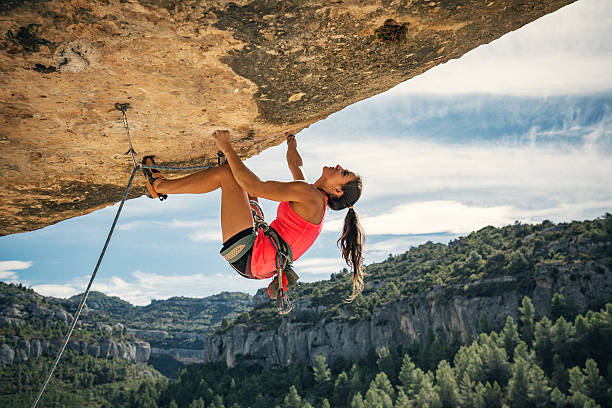
Your body position is everything in climbing. Beginners often lean too far forward (toward the wall) or too far back (away from the wall), which makes it harder to balance and wastes energy. The ideal body position depends on the route—for slabs, lean back slightly; for overhangs, lean in closer to the wall—but the key is to keep your center of gravity over your feet.
How to Fix It Fast: Imagine a string pulling the top of your head toward the ceiling—this keeps your body upright and balanced. For slabs (gentle slopes), shift your weight back slightly to keep your heels down and your feet secure. For overhangs, lean in toward the wall to keep your center of gravity over your feet (this also takes pressure off your arms). Practice on different types of routes to get a feel for how your body should move.
7. Skipping Warm-Ups (Risking Injury)
This is one of the most dangerous mistakes beginners make. Climbing uses muscles you might not use in everyday life—forearms, shoulders, core, and legs—and skipping a warm-up can lead to strains, sprains, or even tears. A good warm-up gets your blood flowing, loosens your muscles, and prepares your body for the work ahead.
How to Fix It Fast: Spend 10–15 minutes warming up before every climbing session. Start with light cardio (jumping jacks, jogging in place) to get your heart rate up. Then do dynamic stretches: arm circles, leg swings, and shoulder stretches. Finish with a few easy climbs—start with a very low-difficulty route and climb it slowly, focusing on technique. Your body will thank you, and you’ll climb better too.
Pro Tips for Avoiding These Mistakes Long-Term
Fixing these mistakes once is easy—making good habits stick takes practice. Here’s what I tell all my beginner students:
- Climb slow, not fast. Rushing leads to bad habits—take your time, focus on each move, and prioritize technique over speed.
- Film yourself climbing. It’s easy to miss your own mistakes, but watching a video will show you where you’re gripping too tight, overreaching, or using poor footwork.
- Ask for feedback. Most climbers (and gym staff) are happy to help—ask a more experienced climber to watch you and point out areas to improve.
- Practice on easy routes. You don’t need to climb hard to get better—mastering the basics on easy routes will make hard routes feel easier later.
Final Thoughts from a Pro
Remember: every pro was once a beginner who made these same mistakes. The difference between a climber who progresses and one who gets stuck is awareness and practice. Don’t get frustrated if you slip up—instead, use it as a learning opportunity. These mistakes are not failures; they’re stepping stones to becoming a better climber.
Start small: pick one mistake to focus on each session (e.g., this week, work on gripping less tight). Once that becomes a habit, move to the next. Before you know it, you’ll be climbing with better technique, more strength, and a lot more fun.
Climbing is about progress, not perfection. Embrace the mistakes, fix them fast, and keep climbing—you’ve got this.
Happy climbing, and keep those feet steady!