Welcome!
Climbing for the first time can be intimidating – we’ve all been there. But that’s what we are here for – helping you find your footing, navigate the pads, and discover why we are all so joyfully obsessed with the sport.
What is bouldering?
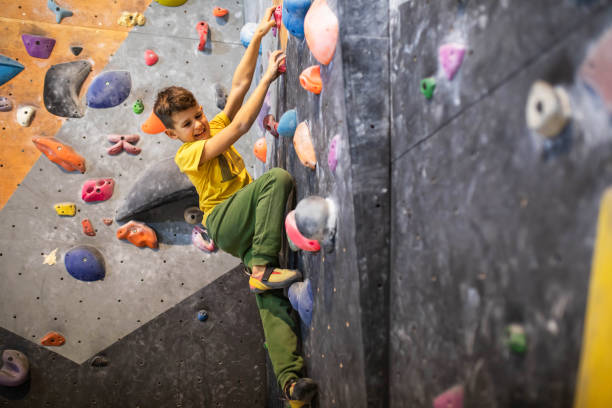
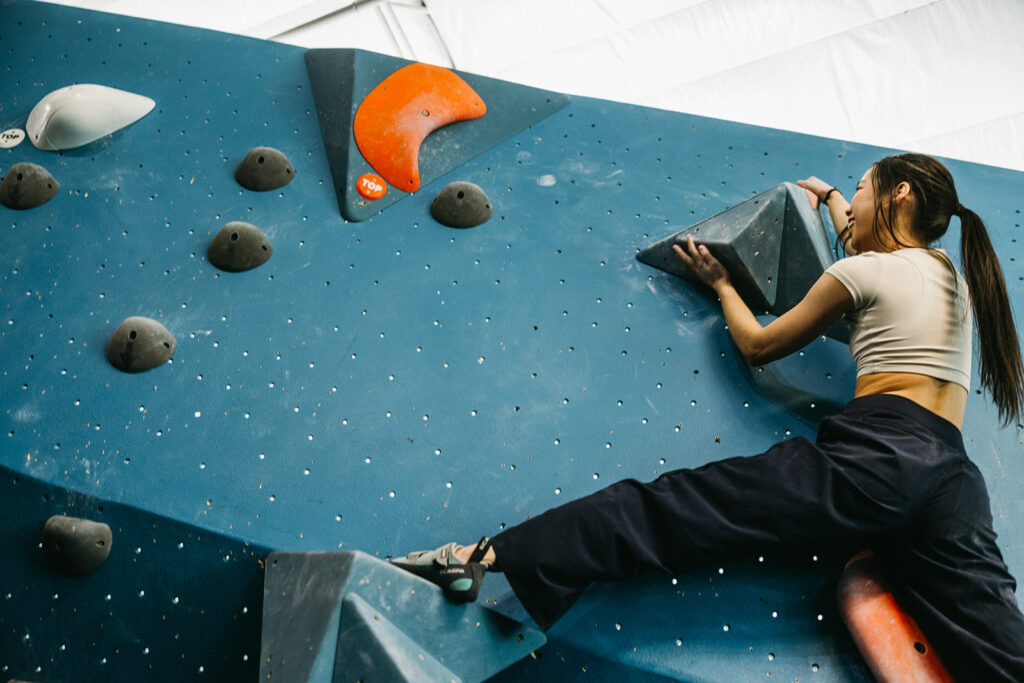
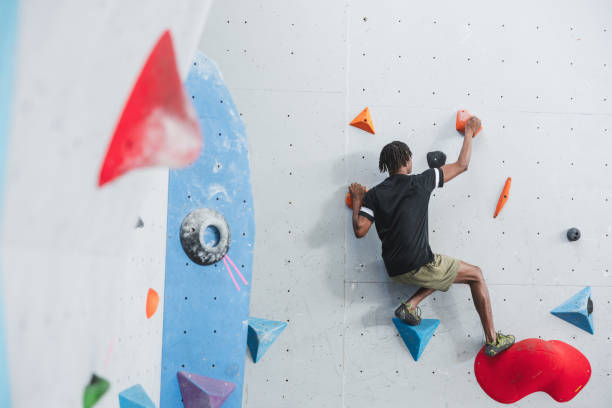
Bouldering is rock climbing without ropes or harnesses – generally not too high off the ground. At Bouldering Project gyms, our walls are about 13-15 feet high and we have giant, squishy pads to cushion your falls. If you’re feeling uncomfortable – ask! Our staff are happy to help you through best practices to prevent injury. Because yes, even the best of us still fall (and fall, and fall, and fall again).
Climbing is a mental exercise as much as a physical one. While challenging our bodies, we also challenge our minds – solving puzzles and engaging in an all-encompassing sport that encourages joy and creativity.
Be prepared
Climbing is a sport, so make sure to bring a water bottle, snacks, and wear comfortable clothes you don’t mind moving in. We have rental shoes if you don’t have your own, and chalk to maximize friction on the wall.
To streamline your visit, fill out a waiver before you come in. You can also explore pricing options (including memberships and day passes) online prior to your visit, and if you have questions, don’t worry! We have qualified staff on site at all times to check you in and give you a full orientation so you can enter the gym area confident and prepared.
Navigating the walls
Bouldering Project strives to create a comfortable and intriguing atmosphere for everyone, anchored in our people and our climbing walls.
Our circuit grading system allows flexibility in your choices – the colors of the hold on the wall will tell you what difficulty level you’re climbing, but we encourage as much exploration as possible. Don’t get too caught up on climbing red versus purple – climb what looks fun. And if you fall, so what? That’s how you learn.
Being alone, together
While climbing is technically a solo sport, the community is what often keeps people coming back. Follow gym etiquette to protect yourself and those around you, whether you’re climbing solo or with a crew.
- Watch out: Look where you walk on the pads! You don’t want another climber falling on you. As the person on the ground, it’s your responsibility to ensure you aren’t walking or standing underneath any other climbers.
- Take turns: We are all here for the same reason – make sure to respect yourself and those around you by giving people lateral space (don’t climb too close to anyone) and checking in with others waiting before you hop on the wall.
Improving comfort on the wall
Once you’re confident on the wall, you can move on to technique.
General climbing practice recommends that you relax. Tense body movement will lead to overuse and quick burnout – especially in the forearms. A few tips and tricks to help you climb and enjoy it for as long as possible:
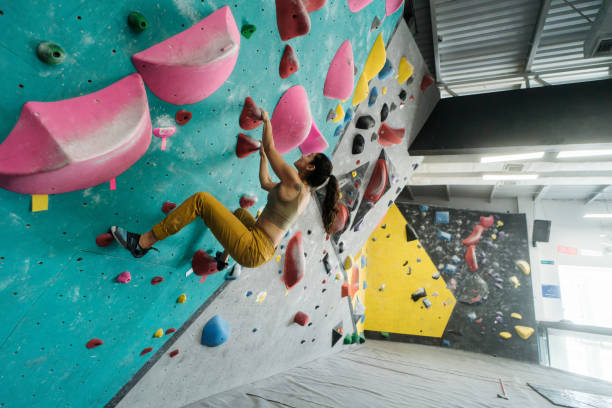
- Straight arms: Use your arms to their full extent and spread them out (don’t do ‘t-rex arms’). Climbing with consistently bent arms will tire you out faster than you expect.
- Footwork: A lot of new climbers underestimate how important their legs are. But your legs are considerably stronger than your arms. Place your feet with intention and use your big toe instead of the arch of your foot to allow a wider range of motion and power.
- Plan ahead: Don’t hop on the wall blindly. Map out your path before you get off the ground. This will help optimize your climbing so that you don’t waste energy on the wall looking for the next hold.