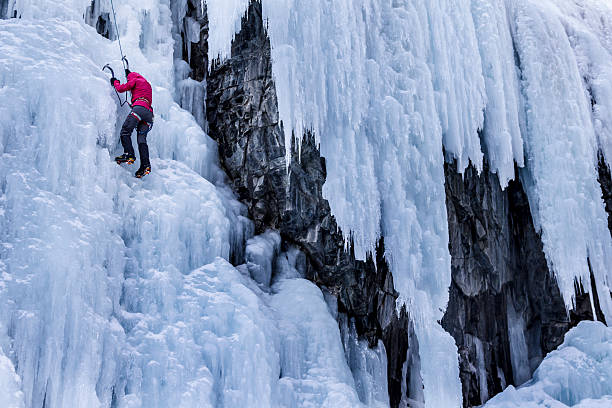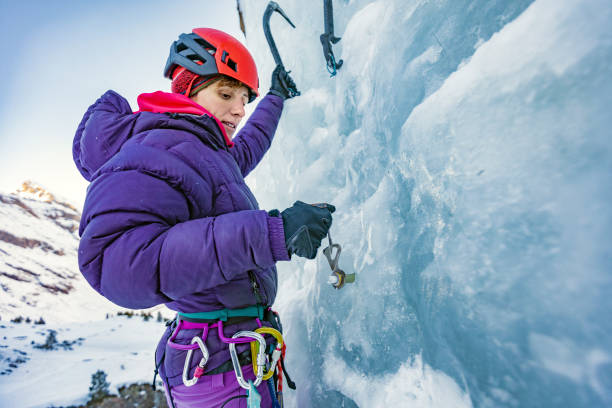
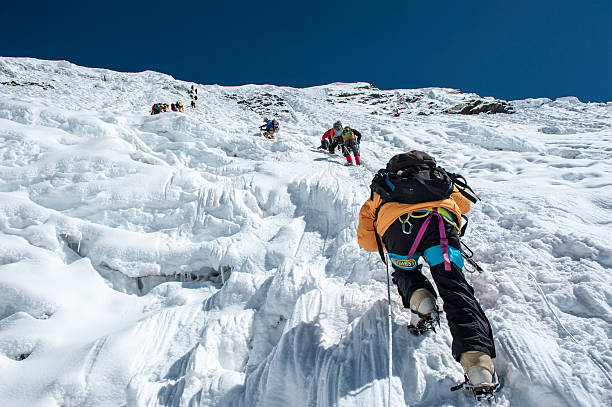
Beginner ice climbers are some of our favorite guests to teach. When someone is new they’re as open minded as possible and they haven’t formed bad habits or previous experiences that make it more challenging to provide the best learning experience. The actual skills for introductory ice climbing classes are usually focused on a few things.
First, How Ice Climbing Equipment Works:
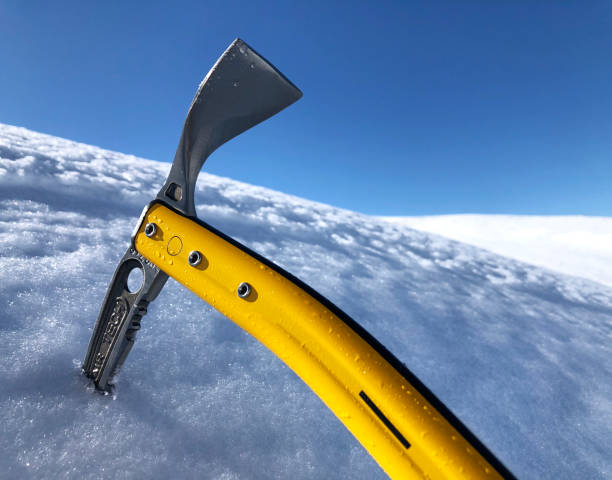
This may be the most complicated bit of the whole day since we need to explain boot and crampon compatibility as well as resize the crampons to a person’s boots. One of the reasons we suggest doing our beginner climbing classes in the Lake City Ice Park is they’ve done a great job of setting up warming huts so regardless of whether you meet us at the Soda Shop or the Ice Park there is a comfortable place to deal with equipment. Aside from that though we use pretty much the same equipment we use during rock climbing with a couple exceptions.
We don’t really like using gri-gris or other camming belay devices. They tend to have trouble with icy ropes which brings us to our next point. Dry treated ropes are great when the ice is wet. You can certainly use a rope that’s been rock climbing all summer but if the temperatures are warm it will soak up water and become extra heavy. Lastly you can use the same harness and helmet as rock climbing but since you’re usually wearing more clothes in the cold you can get away with a harness that has lighter padding. The nice thing about hiring a guide for your first ice climbing experience is they’ll provide all the climbing gear like boots, crampons, ice tools, ropes, and belay devices. If you’re nervous then you can take that off your list of worries. We’ve got you covered.
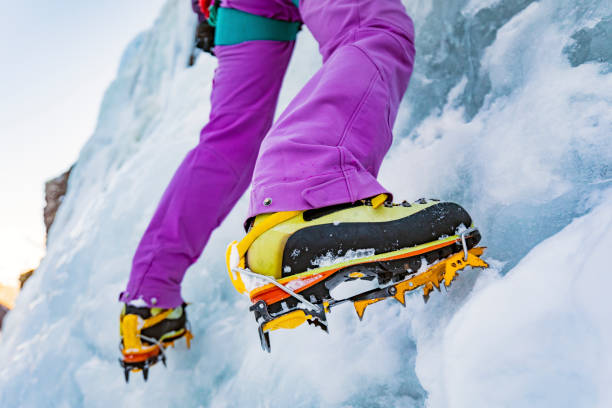
Second, How To Tie In and Belay for Ice Climbing:
If someone has rock climbed before this is usually very easy because it’s mostly the same. There is some nuance like we don’t like to belay close to the wall where we tend to get hit with ice. If you’ve never climbed before though we usually like to go through a couple steps. First we’ll demonstrate, second we’ll practice with everyone on the ground, third we’ll do it for real but with a strong backup, lastly as we gain confidence that our guests are managing skills well we back off a bit to give them some opportunity to be a bit more independent. We’re always nearby to answer questions or help if necessary but part of learning to ice climb is being able to get beyond the hand holding stage.